← Back to the modules

nexya hub

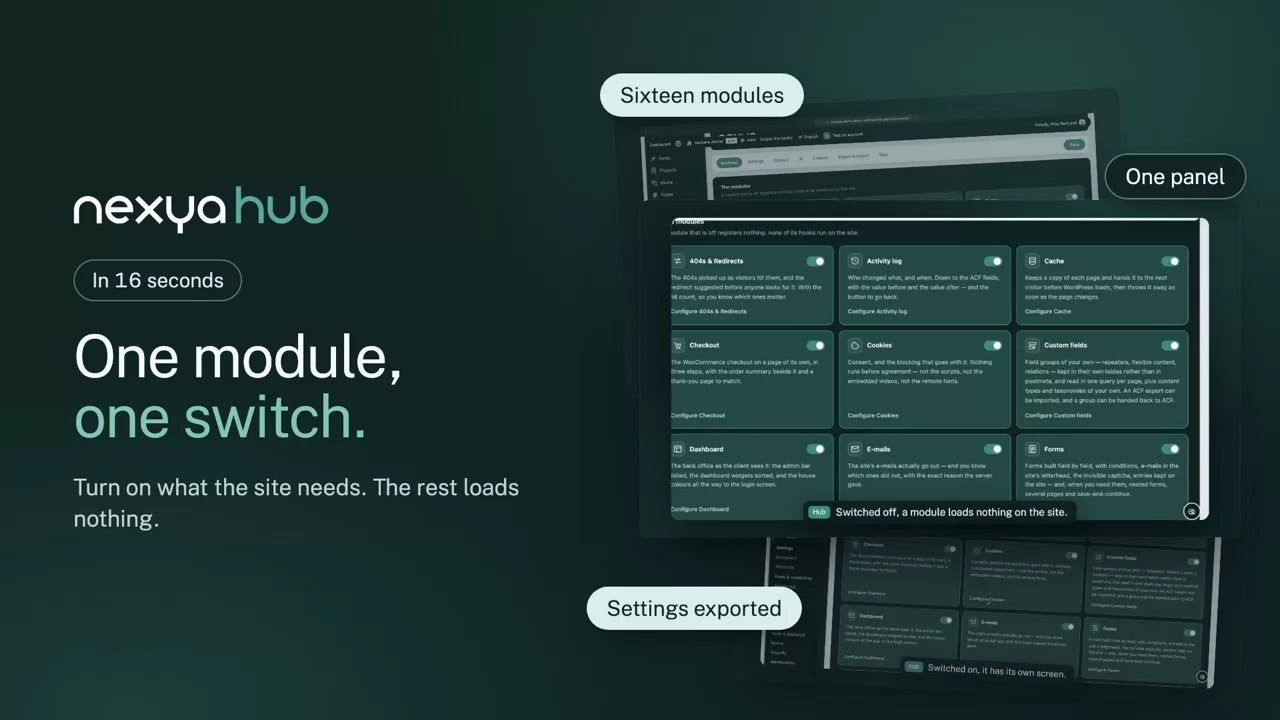
The panel that holds the others together. A module you switch on, a module you switch off — and nothing running on the site while it is off

  • One screen, one vocabulary All twelve modules are configured in the same place, in the same words. Your client does not learn twelve interfaces: they learn one, and it was written for them
  • Off means off A disabled module is not idling: its code is never loaded at all. No query, no script, no line in the head. The site only pays for what it uses
  • One licence, one date, one invoice A single renewal to keep track of instead of twelve, and modules tested together before release — not twelve updates each arriving on their own
  • You see what is running at a glance Every module shows its state and what it does in one line. Picking a site back up six months later does not mean opening twelve settings pages to find out
The settings panel nexya hub
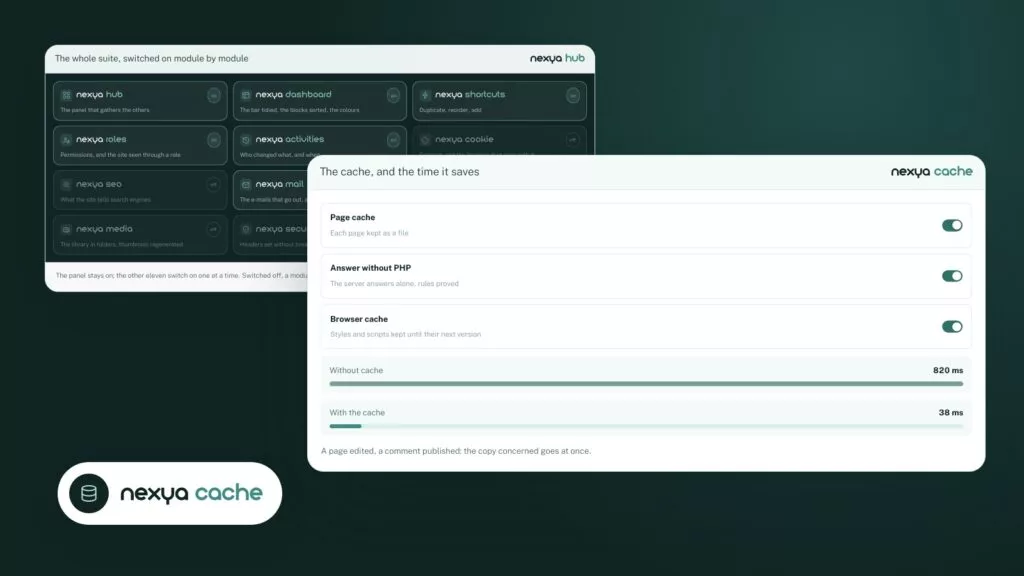
The twelve modules, switched on one by one nexya hub

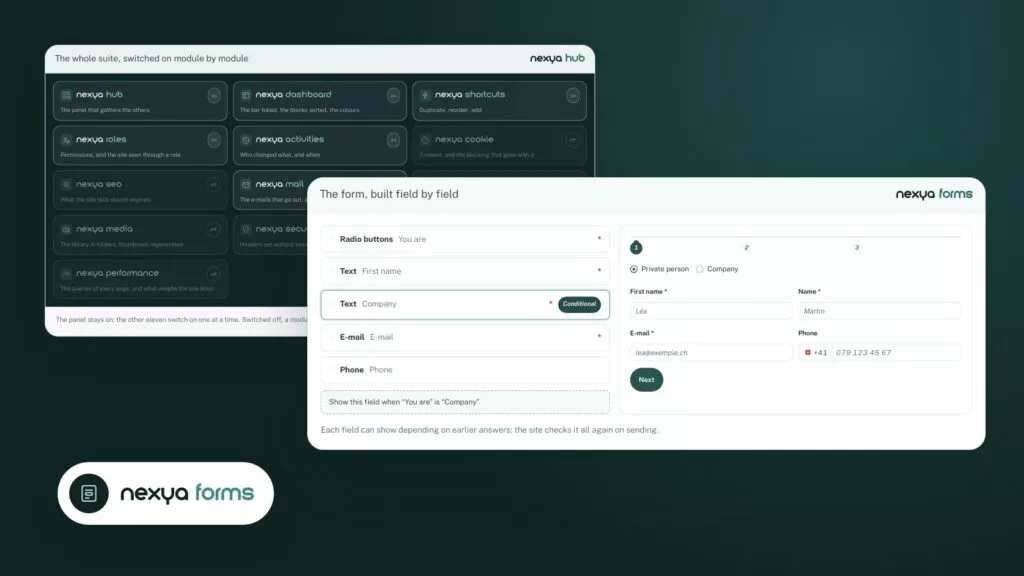
The panel stays on; the other eleven switch on one at a time. Switched off, a module’s code is not loaded at all.
What “off” means here

Plenty of modular plugins load everything, then check a setting before acting. The code is there, it runs, it queries the database — it just does nothing visible. Here the module states are read very early, and only the files of the modules that are on get loaded. A module that is off does not cost a query, a filter, or a single byte in the page.

The panel is meant to be shown

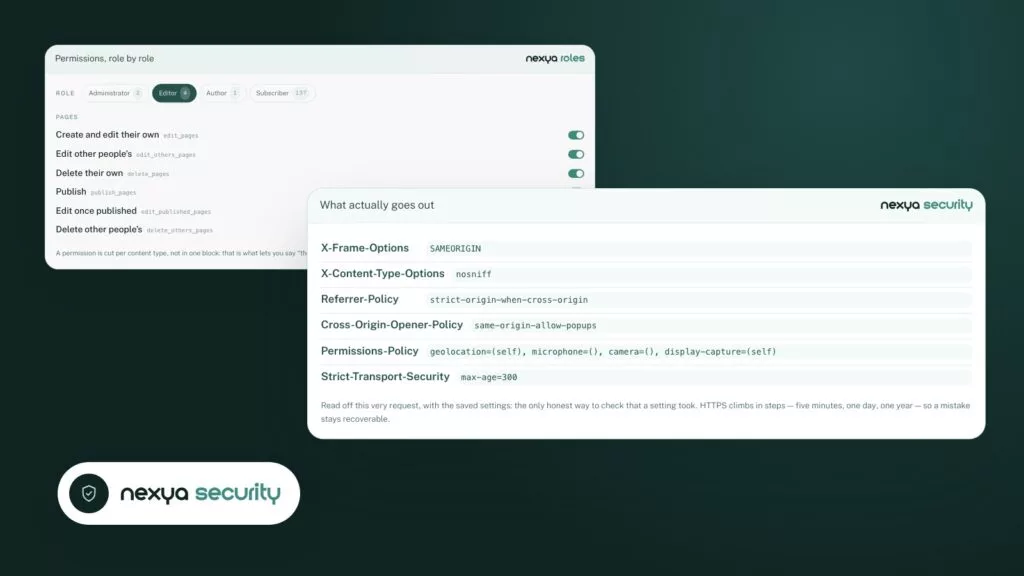
This is the page your client will see, not just you. Settings are grouped by what they change, written without jargon, and the modules reserved for administrators do not appear for an editor. They never get the chance to switch off something they do not understand.

What it does not do

It adds nothing to the public site: no banner, no footer credit, no script. What your visitors see does not change one bit because the suite is installed.

Free

The whole module, always

The suite

The other modules